
Under 90 Days, No Corners Cut
Every leader who has lived through a website project knows the triangle. Fast, good, or affordable: pick two. Conventional wisdom says a full digital platform takes the better part of a year, with months of discovery decks, wireframe reviews, design revisions, and development sprints before a launch that arrives late and over budget.
No Greater Sacrifice went from kickoff to a completely new platform in under 90 days. New design. New content architecture. Direct integration with their Salesforce (opens in a new tab) database. Full accessibility compliance. A site built to be found and cited by AI search engines. Not one broken link left behind.
The national nonprofit delivers debt-free education to the children of fallen and wounded Service members. Their trust is not a thing you rush. This article is about how that timeline was possible, because the answer is not simply "AI made it fast." The answer is a way of working in which speed is the output of a system built for quality rather than a tradeoff against it.
What would have taken most organizations the better part of a year, we delivered in weeks.
The problem: a website that couldn't keep up with the mission
NGS knows every Scholar by name. Every partner school. Every donor. This is an organization built on deep personal relationships: 571 Scholars supported, more than $30 million committed, over 350 colleges and trade schools. The people there can recite those numbers from memory because behind each one is a family they know.
Their website couldn't. The site had accumulated 187 pages over years on an aging platform, and it had fallen behind the organization it represented. It cited 135 partner schools when the real number had grown past 350. The flagship impact report, a document donors genuinely want to read, sat buried as a static PDF. The organization's knowledge was never the problem. The site's ability to reflect it was.
That gap between what an organization knows and what its website says is one of the most common and least discussed problems in the nonprofit world. Their old platform made every edit harder than it should have been, so the site drifted further from reality each month.
For NGS, the right path was a fresh start. Their platform had simply aged past the point of renovation. That was a call specific to their situation, however, not a prescription: the same system described below plugs into an organization's existing stack when the foundation is sound. What matters is the system, not the starting point.
Weeks 1 and 2: Listening
We opened the engagement the way every good one opens, in a room with the people who know the mission best. We met with NGS stakeholders to understand the current state, the operational pain, and what they hoped a new platform would make possible. Then we went deep into the organizational documentation they shared.
There is nothing artificial about this phase, and that is the point. Strategy is human work. No tool decides what an organization needs to say to the families it serves.
Weeks 3 through 8: Preparation, where the speed actually came from
Here is the number that explains everything that follows: the build itself took only 30 days. We spent two-thirds of the engagement making that final third possible.
The AI had to earn the right to build
Before any AI-assisted work began, the platform had to deeply understand NGS. Their voice. Their history. Their facts and their people. We assembled that understanding from organizational documentation, existing website content, and more than a decade of the organization's own social media voice, all ingested into the AiQ Knowledge-base, the proprietary knowledge layer our AI agents draw on for every piece of work. And most importantly, a human gated every document. Only material appropriate for public use made it in. For an organization serving Gold Star families, what the AI is allowed to learn from is a trust decision, and trust decisions belong to people.
Standards before speed
Before a single page was designed, we built NGS's brand guidelines and design system as a living, working reference in Storybook (opens in a new tab). Not a PDF that gets filed away. An operating environment the entire team, human and AI, builds inside. This is where quality stopped being something to check for and became something structural. The rules that make off-brand colors, inaccessible layouts, and inconsistent components nearly impossible to produce were in force before the first page existed. When the pace picked up later, nothing had to be caught after the fact, because most mistakes could not be made in the first place.
A prototype you can click, not a picture you have to imagine
This is the biggest single departure from the traditional agency playbook. There were no wireframes. No static mockups. No deck of concepts to squint at and imagine into being. Our design team, working with Anthropic's Claude (opens in a new tab), built in working code from day one. What NGS reviewed in those early weeks was a real, clickable, browsable prototype, and what they approved was the actual product. Nothing approved was thrown away. Nothing was built twice.
If you have ever sat in a review meeting approving a beautiful mockup, only to watch something slightly but noticeably different emerge from development months later, this last step eliminates that entire category of loss. It is one of the largest sources of both time and disappointment in traditional builds. In this model it simply does not exist.
The final 30 days: The build
With the knowledge base loaded, the standards enforced, and the prototype approved, the build moved at a pace that sounds implausible until you understand what made it safe. The team improved and verified the site dozens of times a day, every day, with every change passing through the automated quality gates from the weeks before.
Specifically, that month produced a platform where every statistic is wired to the source of truth. Numbers on the site trace directly to NGS's Salesforce database. Update a figure once and every page citing it updates. The site cannot drift out of date the way the old one did.
Accessibility became a condition of existing. Automated tests check every component against WCAG 2.2 AA and Section 508 standards before it can ship. Compliance lives in the machinery, not in an after-the-fact audit.
We also designed the platform for the way people seek information today. This includes the AI engines a growing share of families use to ask questions like "how do I apply for a No Greater Sacrifice scholarship?" Those engines can now cite NGS accurately.
And history survived the move. All 218 legacy links redirect to their new homes. Years of bookmarks, citations, and search equity, kept.
The launch, by the numbers
An honest note about that month, because it matters. A meaningful share of the daily work was correction. Experienced people reviewing, catching, redirecting. Every catch became a new automated safeguard, so the same mistake could not recur. That is not a blemish on the process. That is the process. Machines supplied the velocity. People supplied the judgment. The system got permanently smarter with every pass.
Launch, and the handoff most agencies don't make
In July 2026, the new nogreatersacrifice.org (opens in a new tab) went live with a 70% larger content footprint, serving both of NGS's audiences, the families seeking scholarships and the donors funding them, without a single broken link.
Then we did something that surprises people: we handed over the keys. The platform is fully managed by NGS's own team. Every page and every word is editable by the people who know the mission best, supported by a living style guide built directly into their tools. The interactive impact report that was once a buried PDF is now theirs to update. The site that couldn't keep up with the organization is now maintained by the organization, at the speed of the mission.
A platform you can't own is a subscription to your own website. NGS owns theirs.
The tradeoff that didn't happen
Kickoff meeting to site launch in under 90 days is impressive. However, the timeline was never the point, and it is the least interesting number in this story.
What matters is what did not happen. Quality did not slip; the system enforced it from week three. The brand did not drift; we encoded it before design began. Accessibility never waited for a retrofit; shipping required it. The statistics are not already stale; they trace to the source. The client did not inherit a dependency; they inherited a platform they run themselves.
Fast, good, and built to last. You no longer need to pick just two when quality stops being something you inspect for at the end and becomes the system everything is built inside of. Ultimately, speed is not the achievement. Speed is the evidence.
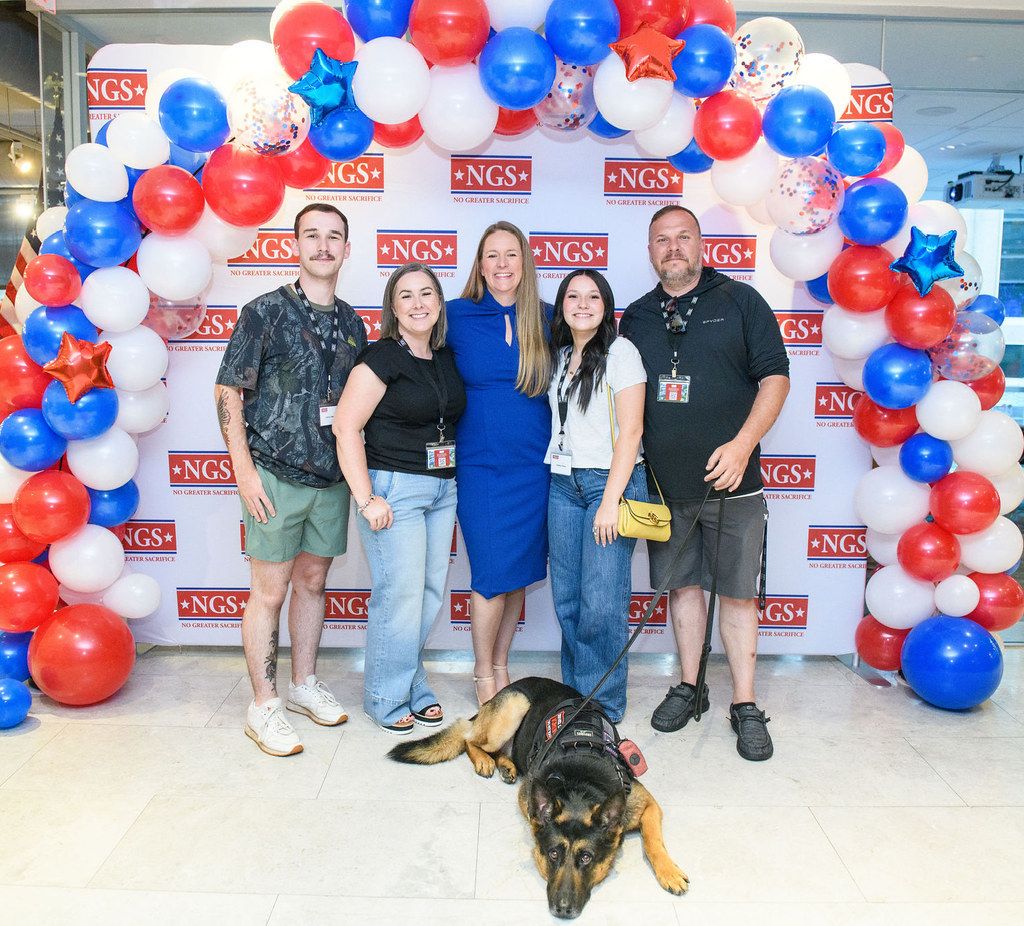
No Greater Sacrifice
The human side of this system is its own story, and it is next: The Most Important Layer of Our AI Stack Is Human.

Steve Hamilton
SVP, DXP and Custom Solutions Practice
Stay Informed
Get industry-leading insights delivered to your inbox.
Industry Leading Insights
Our latest thinking on personalization, digital transformation and experience design